Showing posts with label OTC. Show all posts

Thursday, January 29, 2026

Vicks DayQuil & NyQuil Ultra Concentrated Liquicaps Co-Pack Review


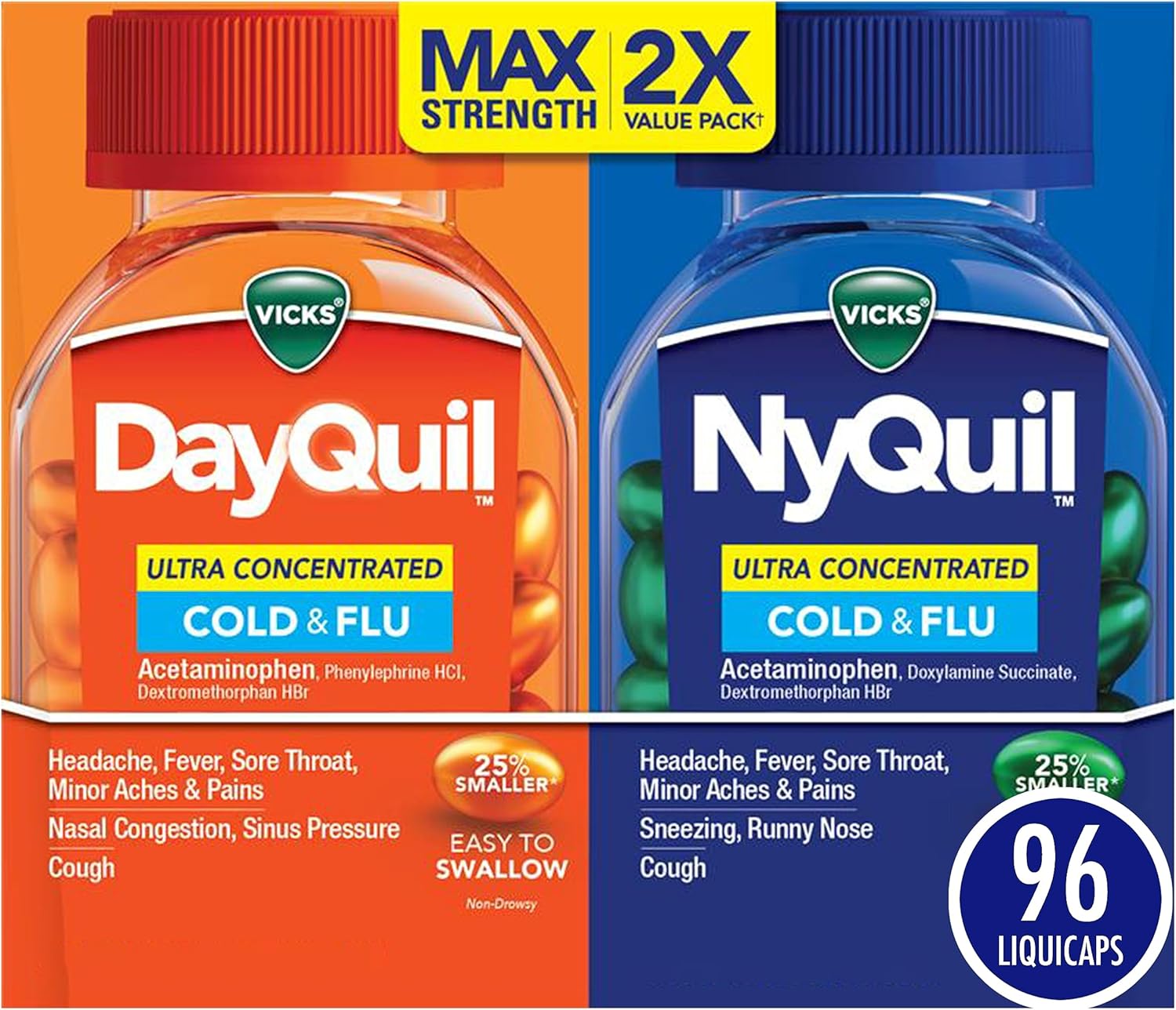
Vicks DayQuil & NyQuil Ultra Concentrated Liquicaps co-pack is one of the most recognizable over-the-counter cold and flu medicine combinations available. Designed to offer powerful multi-symptom relief for both daytime and nighttime use, this 96-count package provides a substantial supply intended to help you manage cold and flu symptoms through an entire cycle of illness. In this review, we’ll explore how the product works, what it contains, how well it performs, who it’s best suited for, and potential drawbacks.

What It Is

This co-pack includes two distinct formulas:

DayQuil Ultra Concentrated Liquicaps – Intended for daytime use, non-drowsy, formulated to relieve symptoms that interfere with daily activities.
• NyQuil Ultra Concentrated Liquicaps – Intended for nighttime use, includes ingredients that may cause drowsiness to help you rest.

The idea behind the co-pack is a balanced approach: tackle symptoms during the day without sedation, and address lingering discomfort at night with a formulation that promotes sleep.

Ingredients and How They Work

Both DayQuil and NyQuil versions contain a combination of active ingredients aimed at treating common cold and flu symptoms:

Pain reliever/fever reducer – Helps alleviate headaches, minor aches, pains, and reduces fever.
Decongestant – Helps relieve nasal and sinus congestion so you can breathe easier.
Cough suppressant – Reduces the urge to cough, especially useful at night.
Antihistamine (in NyQuil) – Helps address runny nose, sneezing, and also contributes to drowsiness for restful sleep.

The “Ultra Concentrated” label means each liquicap contains a full dose of these active ingredients in a compact soft gel form, making it easy to swallow and convenient for fast relief.

Packaging and Dosage

The 96-count co-pack typically includes equal portions of DayQuil and NyQuil liquicaps. The bottles are clearly labeled to prevent mix-ups, and the packaging is sturdy enough for storage in a medicine cabinet or travel bag.

Dosage instructions recommend taking a specified number of liquicaps every four to six hours as needed, not exceeding the maximum daily amount listed on the packaging. DayQuil is taken during waking hours, and NyQuil is intended for the evening before sleep.

Performance

In use, DayQuil delivers noticeable relief from multiple symptoms without causing drowsiness. Users often report easier breathing, reduced sinus pressure, and diminished aches, allowing them to carry on with work, chores, or errands even when feeling under the weather. The cough suppressant helps quiet persistent coughing, which is especially helpful in situations where coughing would otherwise disrupt productivity.

NyQuil’s formula is effective at relieving nighttime symptoms. The drowsiness associated with NyQuil can be a benefit when it comes time to rest. Many users find that NyQuil helps them fall asleep more comfortably and stay asleep by reducing coughing, runny nose, and overall discomfort. This makes it easier to get the rest often needed for recovery.

Effectiveness for Key Symptoms

Headache and Fever: Both DayQuil and NyQuil components provide reliable relief, reducing pain and bringing down fever effectively.
Sore Throat: The pain-relieving ingredient helps soothe irritation and discomfort, though relief may vary depending on severity.
Cough: Cough suppression works well for dry, irritating coughs, though results may vary with wet or productive coughs.
Congestion: Nasal decongestion is noticeable; users generally experience clearer breathing and reduced sinus pressure.

Pros

• Comprehensive multi-symptom relief.
• Day and night formulas complement each other for round-the-clock care.
Non-drowsy daytime relief.
• Helpful nighttime sedation for sleep.
• Easy-to-swallow liquicaps.
• Large supply with 96 total liquicaps.

Cons and Considerations

• Drowsiness with NyQuil means you should avoid driving or operating machinery after taking it.
• Not suitable for everyone—individuals with certain health conditions, those taking other medications, or pregnant or breastfeeding individuals should consult a healthcare professional before use.
• Some users may find the dosing schedule restrictive if symptoms fluctuate frequently.
• As with any combination medicine, some ingredients may be unnecessary for certain symptom profiles, meaning you might be taking components you don’t need.

Who It’s Best For

This co-pack is ideal for adults and teens seeking a convenient and recognizable solution for managing typical cold and flu symptoms. It’s especially useful for people who want a structured day/night approach without having to purchase separate products. It’s also a good option for households that want a ready-to-use supply for seasonal illnesses.

Conclusion

The Vicks DayQuil & NyQuil Ultra Concentrated Liquicaps co-pack delivers reliable, multi-symptom relief with a well-thought-out day and night pairing. Its convenient liquicap form, recognizable brand trust, and large count make it a solid choice for those dealing with the full range of cold and flu discomforts. While not suitable for everyone and requiring responsible use, many people will find this co-pack an effective component of their cold and flu care routine.

Find Vicks Liquicaps On Amazon!

Tuesday, November 5, 2024

In-Depth Review of Bayer Aspirin Low Dose 81 mg, Enteric Coated Tablets (300 Tablets)


Bayer Aspirin Low Dose 81 mg, Enteric Coated Tablets, marketed as a product for secondary prevention of cardiovascular disease, has been a staple in the medical community for decades. It is widely recommended by healthcare professionals for reducing the risk of heart attack, stroke, and other cardiovascular events. In this review, we’ll take an in-depth look at the product from several perspectives: its active ingredients, effectiveness, formulation, ease of use, and safety profile, while also considering user experience and value.

1. Product Overview:

Bayer’s Aspirin Low Dose 81 mg tablets are designed primarily for the secondary prevention of cardiovascular disease (CVD). This means that the medication is intended for people who have already experienced a heart attack, stroke, or other cardiovascular event and need ongoing treatment to reduce the risk of future events. The low dose of 81 mg is typically recommended because it is effective in inhibiting platelet aggregation (the clumping together of blood cells), which is a key factor in the formation of blood clots that can lead to heart attacks or strokes.

Each bottle contains 300 safety-coated tablets, making this a value-packed option for long-term use. The enteric coating is designed to help reduce stomach irritation, a common side effect of aspirin, by preventing the tablet from dissolving in the stomach.

2. Active Ingredient and Mechanism of Action:

The active ingredient in this medication is acetylsalicylic acid (aspirin), which has long been known for its blood-thinning properties. Aspirin works by inhibiting the enzyme cyclooxygenase (COX), which plays a critical role in producing prostaglandins — chemicals in the body involved in inflammation and blood clotting. By inhibiting COX, aspirin prevents the formation of thromboxane A2, a molecule that promotes platelet aggregation and vasoconstriction, both of which are central to the development of blood clots.

At the 81 mg dose, aspirin is effective in preventing platelets from sticking together, but it is not high enough to cause bleeding risks in most people. This is why 81 mg is generally the recommended dose for preventing cardiovascular events. It provides a safe balance between efficacy and minimizing side effects like gastrointestinal irritation, which can occur at higher doses.

3. Formulation – Enteric Coating:

A distinctive feature of Bayer’s low-dose aspirin tablets is their enteric coating. Enteric coatings are designed to prevent the tablet from dissolving in the stomach, thus reducing the risk of stomach irritation or ulcers that can be caused by aspirin, particularly when used over the long term.

The enteric coating allows the aspirin to dissolve further along the digestive tract, typically in the small intestine, where it is less likely to cause gastric discomfort. For individuals who experience stomach upset with standard aspirin, this formulation can be a significant advantage.

However, while the enteric coating helps protect the stomach, it may slow the onset of action slightly, meaning that the aspirin may not start working as quickly as uncoated aspirin. This is not a significant concern for people using aspirin for long-term prevention, but it’s worth noting if someone needs immediate relief for acute conditions.

4. Effectiveness for Secondary Prevention of Cardiovascular Disease:

Bayer Aspirin 81 mg is widely recommended by healthcare professionals for the secondary prevention of cardiovascular disease. The evidence supporting aspirin in reducing the risk of heart attack and stroke in high-risk individuals is well-established. A landmark study, the Physician's Health Study, demonstrated that low-dose aspirin (81 mg) reduced the risk of heart attack by approximately 30% in middle-aged men, and other studies have confirmed its role in stroke prevention.

For people who have already suffered a heart attack, stroke, or transient ischemic attack (TIA), the regular use of aspirin helps prevent further events. In people with chronic conditions such as coronary artery disease (CAD) or those who have undergone procedures like coronary artery bypass grafting (CABG), aspirin therapy is also a key component of ongoing management.

However, it’s important to note that while aspirin is effective for secondary prevention, it is not recommended for primary prevention (i.e., in individuals who have not had a cardiovascular event and have no other significant risk factors). Aspirin therapy for healthy individuals has potential risks, including gastrointestinal bleeding, and these risks should be carefully weighed by a healthcare provider.

5. Safety Profile and Side Effects:

As with any medication, Bayer Aspirin Low Dose 81 mg has potential side effects. The most common ones, especially in those who take aspirin regularly, include:

  • Gastrointestinal discomfort (bloating, nausea, upset stomach)
  • Bleeding risk, particularly in the gastrointestinal tract or when combined with other blood thinners (e.g., warfarin, clopidogrel)
  • Allergic reactions, although rare, can cause skin rashes, hives, or even more severe symptoms like difficulty breathing
  • Bruising is also more common when taking aspirin regularly due to its effect on platelet aggregation

The enteric coating helps reduce the likelihood of stomach irritation, but it does not eliminate it entirely. Users who experience any discomfort should discuss alternative formulations or strategies with their healthcare provider. Additionally, individuals with a history of peptic ulcers, gastritis, or active gastrointestinal bleeding should avoid aspirin or take it under close medical supervision.

There are also warnings for people with certain conditions, such as asthma (aspirin may exacerbate symptoms), kidney disease, and liver disease. Pregnant women, particularly in the third trimester, should avoid aspirin, as it can pose risks to the developing fetus.

6. User Experience:

From a user experience perspective, Bayer Aspirin 81 mg is praised for its convenient tablet size and enteric coating. The tablets are relatively small and easy to swallow, which is a bonus for people who need to take aspirin daily. The bottle of 300 tablets is a great value for those who need long-term use, reducing the frequency of repurchase and making it ideal for individuals managing chronic conditions.

One potential downside for some users is the cost compared to generic aspirin options. While Bayer’s brand name is trusted and known for quality, the price can be higher than generics. However, many users find that the added convenience of the enteric coating justifies the price.

7. Value for Money:

At a pack size of 300 tablets, Bayer Aspirin 81 mg is priced competitively for those who require daily aspirin therapy. The cost per tablet is relatively low when purchased in bulk, especially when considering the brand's reputation for quality and the convenience of not needing to buy aspirin frequently.

In comparison to generic versions of low-dose aspirin, Bayer may be somewhat pricier, but many users are willing to pay a little extra for the trust in the brand and the added benefit of the enteric coating.

8. Final Verdict:

Bayer Aspirin Low Dose 81 mg, Enteric Coated Tablets offers a trusted, effective option for secondary prevention of cardiovascular disease. It is particularly beneficial for individuals who require long-term aspirin therapy but are sensitive to the gastric irritation often caused by non-enteric coated aspirin. The 300-tablet bottle provides an excellent value for people managing chronic cardiovascular conditions, and the enteric coating makes it a more tolerable option for long-term use.

However, potential users should consult with their healthcare provider before beginning aspirin therapy, especially if they have underlying medical conditions or are at risk for bleeding. While aspirin is effective at reducing the risk of future cardiovascular events, it does come with risks, and these should be carefully considered. In the right individuals, Bayer Aspirin 81 mg remains an essential tool in the fight against heart disease, offering both efficacy and safety with appropriate use.

See Bayer Aspirin On Amazon! 

Vicks DayQuil & NyQuil Ultra Concentrated Liquicaps Co-Pack Review

Vicks DayQuil & NyQuil Ultra Concentrated Liquicaps co-pack is one of the most recognizable over-the-counter cold and flu medicine co...